
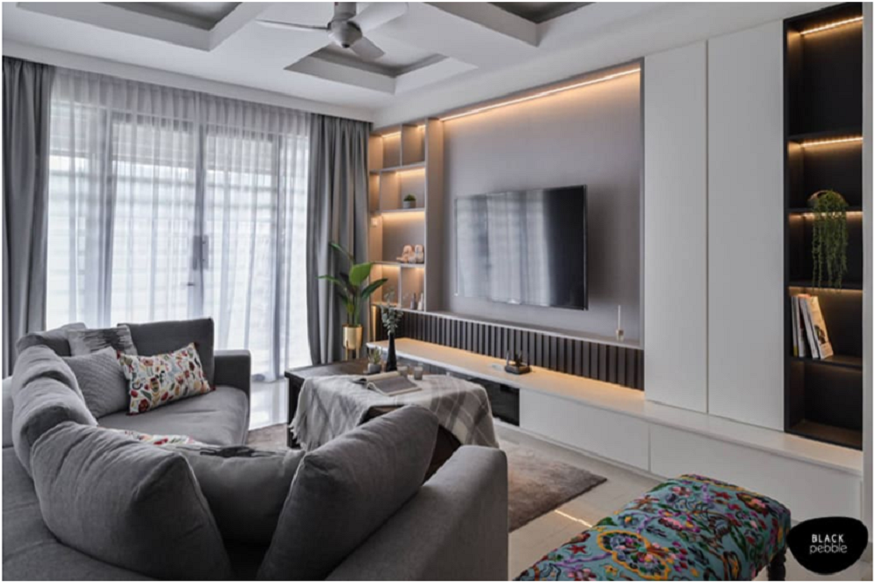
Walk into any upscale home in Mangalore’s Kadri Hills or a renovated flat in Kankanady, and there’s a fair chance you’ll spot the signature work of Black Pebble Designs. Clean lines meeting coastal textures. Monsoon-proof materials paired with statement lighting. Spaces that breathe despite the humidity.
The firm didn’t arrive with fanfare or a celebrity client list. They earned their reputation project by project, room by room, solving the specific challenges that come with designing interiors in a coastal city where salt air corrodes hardware and the rains test every material choice.
The Mangalore Design Gap
For years, Mangalore’s interior design scene existed in a strange middle ground. Homeowners had two options: hire someone local who understood the climate but lacked contemporary design training, or bring in a designer from Bangalore or Mumbai who produced beautiful renders but didn’t account for the practical realities of coastal living.
Black Pebble Designs – Interior designers in Mangalore, recognised this gap early. Founder Kshema Rai had worked as an interior designer in Mumbai for over 18 years before bringing her expertise to Mangalore. She’d seen enough furniture warp in the humidity and enough imported wallpaper peel in three months to know that beautiful design means nothing if it can’t survive its environment.
The firm’s approach was different from the start. Rather than imposing Mumbai’s urban aesthetic wholesale, Kshema began studying what actually worked in Mangalore’s specific conditions. Which materials held up against salt air. Which finishes survived the monsoons. Which local suppliers could deliver consistent quality.
This wasn’t about compromise. It was about intelligent adaptation.
Building Trust Through Material Knowledge
What sets Black Pebble apart isn’t aesthetic vision alone, though they certainly have that. It’s the encyclopaedic knowledge of what works in Mangalore’s specific conditions. Ask about hardware options, and you’ll get a breakdown of why SS 316 stainless steel is non-negotiable for coastal environments, even when clients balk at the cost difference.
The firm exclusively uses BWP 710 grade plywood for all projects. Not because it’s trendy, but because it’s marine-grade and actually resists moisture. In a city where humidity regularly exceeds 80% during monsoon months, this matters more than any design magazine feature.
Kshema maintains relationships with suppliers most interior decorators in Mangalore wouldn’t think to contact. Fabricators who understand the difference between standard and marine-grade specifications. Craftspeople who know how to account for wood movement during the rainy season. Lighting suppliers who can modify imported fixtures to handle Mangalore’s voltage fluctuations.
This isn’t glamorous work. It doesn’t photograph well for social media. But it’s the foundation of their authority in the market.
During client consultations, a significant portion involves fixing problems created by other designers. Wardrobes that won’t close properly because the wood expanded. Kitchen cabinets with rusting hinges after six months. Bathrooms with inadequate waterproofing that’s led to seepage into the flat below.
“Clients come to us when the pretty design stops working,” Kshema explains. That reputation for reliability built credibility faster than any marketing campaign could.
The Personal Touch That Scales
Unlike larger firms where junior designers handle most client interaction, Black Pebble operates on a fundamentally different model. Kshema personally manages every project from initial consultation through final installation. There’s no handoff to a team. No delegation to less experienced designers. No surprise when a different person shows up to the site visit.
This personal approach seemed like it would limit growth. How many projects can one designer realistically handle? But it became the firm’s competitive advantage. Clients weren’t hiring a brand, they were hiring Kshema. They knew exactly who would be making decisions about their home.
The model requires discipline. Kshema can’t take every project that comes through. She has to be selective, focusing on clients who value the depth of attention she provides over the speed of execution that larger firms might offer.
But for homeowners tired of feeling like just another project number, this matters enormously. One client, who had previously worked with a Bangalore firm, mentioned that the difference was stark. “With the other firm, I’d email and wait three days for a response from whoever was assigned that week. With Kshema, I WhatsApp and she responds within 24 hours. Always her. She remembers every conversation.”
Solving Real Problems, Not Just Creating Beauty
The firm’s portfolio spans bedroom interiors, living room design, kitchen interiors, bathroom renovations, and false ceiling concepts. But listing services misses what actually happens in practice.
Take a recent 3BHK project in Planet SKS, where Black Pebble’s own office is located. The 3,300 square foot flat had good bones but the layout felt segmented and dark. The client wanted modern luxury without sacrificing the practical storage needs of a family with young children.
Kshema’s solution involved more than selecting finishes. She reconfigured the space plan to improve natural light flow. Designed custom modular furniture that maximised vertical storage without feeling imposing. Selected a colour scheme that made the space feel larger whilst remaining warm rather than clinical. Integrated smart automation for lighting and climate control that actually simplified daily life rather than adding complexity.
The project took several months, working around monsoon delays that are simply inevitable in Mangalore. But the result works. Not just on the day of handover, but six months later when the family is actually living in the space.
The Mumbai Influence, Mangalore Reality
Kshema’s 18 years in Mumbai inform her work in ways that go beyond aesthetic preferences. Mumbai taught her how to work within constraints, how to maximise limited space, how to create sophistication without relying on sheer square footage.
But she’s not trying to recreate Mumbai in Mangalore. The cities have different rhythms, different needs, different building ecosystems. What works in a high-rise in Worli won’t necessarily translate to a villa in Bendoorwell.
The synthesis shows in projects that feel both contemporary and appropriate. A residence in Bejai features clean minimalist lines that could fit in any metro, but the material palette, ventilation design, and detailing account for coastal conditions. It looks urban but functions for its actual location.
This balance between modern design sensibility and local practicality has become Black Pebble’s signature. Clients get interiors that feel current without seeming imported from somewhere else.
Transparent Process in an Opaque Industry
One of the most common complaints about interior designers involves budget surprises. The initial quote seems reasonable, then modifications pile up, premium materials get specified as standard, and the final bill bears little resemblance to the estimate.
Kshema built her practice on the opposite approach. Detailed quotations upfront. Clear communication about what’s included and what would cost extra. Regular updates as the project progresses. No surprises.
This transparency extends to timeline management. She builds monsoon delays into schedules from the start rather than treating them as unexpected setbacks. She’s upfront about which local contractors are reliable and which ones require constant supervision. She explains why certain specifications matter and where clients can save money without sacrificing quality.
For clients, especially those managing projects remotely, this removes enormous stress. They’re not constantly wondering what’s happening or whether costs are spiralling. The information flow is consistent and honest.
One testimonial mentions this explicitly: “I don’t live in Mangalore, so I needed someone I could trust to handle everything. Kshema managed contractors, suppliers, everything. I only had to deal with her. It was an excellent renovation journey from design to handover.”
The Vastu Consideration
Many Mangalore clients want interiors that respect Vastu principles. This creates an interesting design challenge, balancing ancient directional guidelines with contemporary spatial needs and coastal building realities.
Rather than treating Vastu as a constraint, Kshema integrates it into the planning process from the beginning. Pooja room placement, bed orientation, kitchen direction, these considerations shape the initial space planning rather than getting retrofitted awkwardly later.
The result feels cohesive rather than compromised. Clients get homes that align with their cultural values whilst maintaining the clean, modern aesthetic they’re seeking.
Commercial Work That Functions
Whilst residential projects form the core of Black Pebble’s portfolio, commercial work has expanded their influence. Office interior design requires a different skill set. The spaces need to project professionalism whilst supporting actual productivity. Aesthetic choices matter, but function drives everything.
Kshema approaches commercial projects with the same material rigour as residential work. Finishes need to hold up under heavy use. Lighting must work for extended hours without causing eye strain. Storage solutions need to accommodate messy real-world operations, not just look organised in photographs.
A recent office project in Kadri involved transforming a conventional workspace into something that felt contemporary without being trendy. The client wanted to attract younger talent whilst maintaining credibility with established business contacts.
The design used natural materials, abundant light, and flexible furniture arrangements that could adapt as the company grew. Nothing revolutionary, but everything executed with precision. The space photographs well, but more importantly, people enjoy working there.
The Remote Client Model
An interesting development has been Black Pebble’s work with clients who aren’t physically in Mangalore during the renovation process. NRIs renovating ancestral properties. Professionals working in other cities who’ve bought flats as investments or eventual retirement homes. Families relocating but managing the setup before they arrive.
Kshema adapted her practice to serve these remote clients through detailed WhatsApp communication, video calls for site updates, and comprehensive project management that removes the need for constant client presence.
One client mentioned: “After contacting a few interior designers in Mangalore for our home renovation, we finally decided to go with Black Pebble Designs. Communication throughout the project was good. Kshema was always easy to reach, responsive, and quick to reply. The construction quality of everything from the modular kitchen cabinets to the wardrobes is top quality.”
This capability became particularly valuable during periods when travel was restricted, but it’s continued as a service model even as movement normalised. It expands Black Pebble’s reach beyond clients who can attend weekly site meetings.
Pan-India Sourcing for Local Projects
Whilst Kshema emphasises using marine-grade materials appropriate for Mangalore’s climate, she sources decorative elements from across India. Light fixtures from artisan workshops in Rajasthan. Textiles from weavers in Gujarat. Custom hardware from specialty manufacturers in Mumbai.
This curated sourcing brings uniqueness to projects without relying on standard catalogue selections. Clients get pieces with character and story, items that elevate the design beyond what’s available in local showrooms.
But the sourcing is strategic, not indiscriminate. Decorative elements come from elsewhere, but structural materials and anything exposed to weather conditions are selected specifically for coastal durability.
The Authority Question
So how did Black Pebble Designs become Mangalore’s design authority? Not through aggressive marketing or celebrity endorsements. The firm’s Instagram exists but isn’t particularly polished. They don’t advertise heavily. There are no billboards or radio spots.
They built authority by being authoritative. By knowing more about what actually works in Mangalore than anyone else. By delivering consistent quality across projects. By being reachable and honest when problems arise. By treating each client’s home with the same care regardless of project size.
When a builder in Hampankatta wants to create upscale units that will command premium pricing, they call Black Pebble. When a homeowner is overwhelmed by Pinterest ideas and conflicting contractor advice, they call Black Pebble. When someone needs their bathroom redesigned after the first designer’s work failed within a year, they call Black Pebble.
Authority isn’t claimed through branding. It’s recognised by others. And in Mangalore’s design community, that recognition is now nearly universal.
The 3BHK makeover video showcasing their complete home interior approach demonstrates this confidence. It’s not styled for maximum drama. It shows a real flat, fully furnished and functional, representing the kind of modern luxury interiors that Mangalorean homeowners actually want to live in.
What Comes Next
Black Pebble isn’t resting on established success. The practice continues evolving, exploring more sustainable material options, developing relationships with craftspeople who can execute custom furniture designs, refining the remote consultation process to serve clients across Karnataka and beyond.
Kshema’s also been thinking about how to make quality design more accessible to clients with tighter budgets. Not by cutting corners on materials, that’s non-negotiable in coastal conditions, but by being smarter about where to invest and where standard solutions work perfectly well.
The firm serves areas throughout Mangalore and beyond: Kadri, Bejai, Kodialbail, Bendoorwell, Kankanady, Hampankatta, Falnir, as well as Udupi and Manipal. Each location has its particular quirks, its own contractor ecosystem, its specific challenges.
From starting as a Mumbai designer bringing urban sophistication to her hometown, Kshema has fundamentally raised expectations for what interior design can accomplish in a coastal city. She’s proved that beautiful, functional, climate-appropriate design isn’t a compromise between competing values but an integration of them.
Ten years from now, Mangalore’s design landscape will have shifted further. More designers will understand that marine-grade materials aren’t optional in coastal environments. More clients will expect transparency in budgeting and communication. More homes will be designed with actual living patterns in mind rather than just visual impact.
Black Pebble Designs helped create that shift. Not through manifestos or design movements, but through consistent, excellent work that solved real problems for real people.
That’s worth more than any award or media feature. That’s actual authority.